Foam Party Companies Aren’t All The Same. Here Are Ten Things You Need To Know
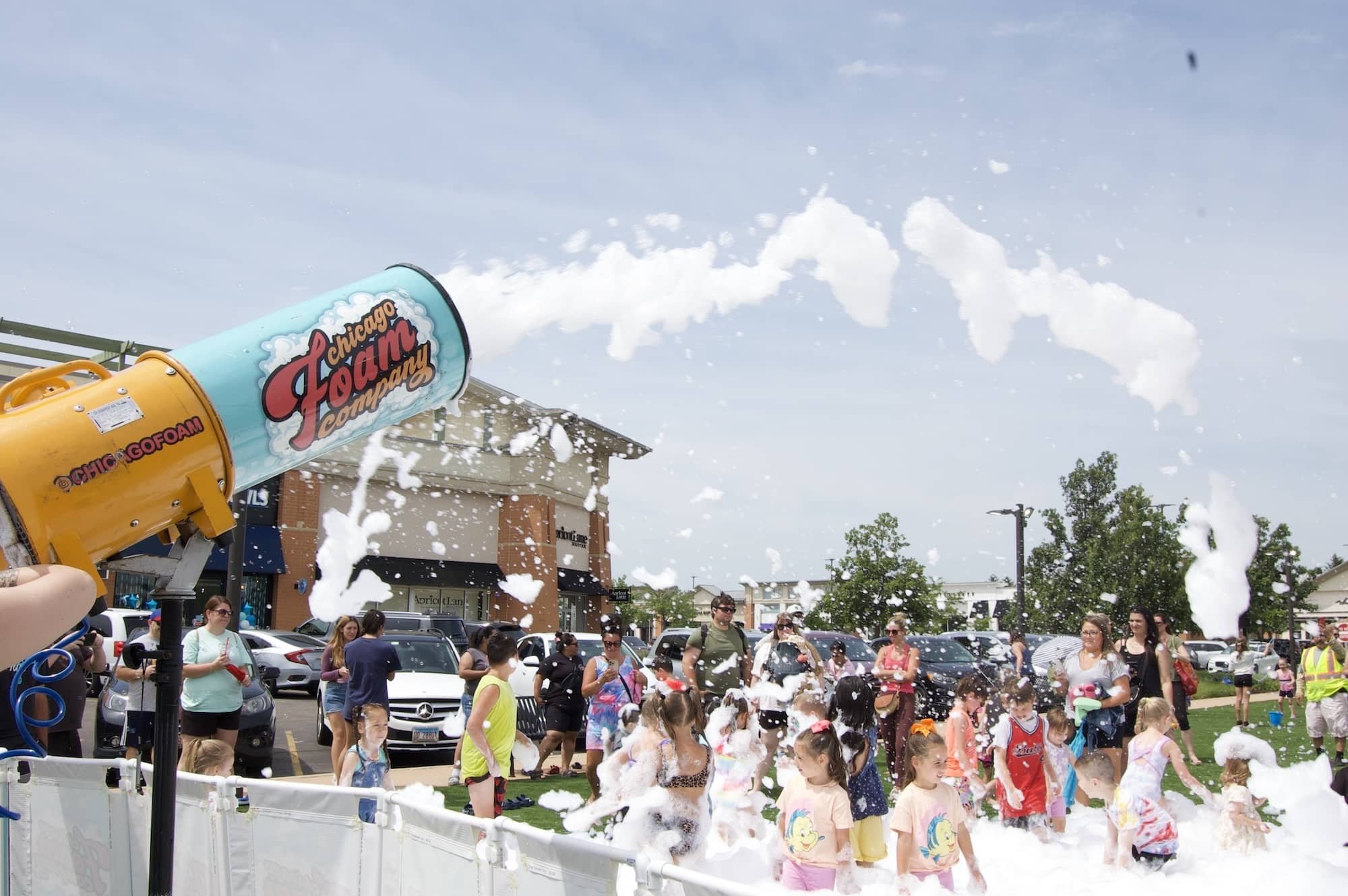
If you’re planning a foam party, you’ve probably noticed something strange:
Most foam party companies look nearly identical online—yet their prices can vary quite a bit.
That leads to a fair question: Is there really any difference between foam party providers besides price?
The answer is yes. There are meaningful differences, but they’re not always obvious from browsing websites or scrolling through photos. Most foam parties look similar on the surface. The real differences show up in how the event is run, how problems are handled, and how much responsibility falls on you as the organizer.
This guide breaks down what actually separates foam party companies so you can choose confidently, without relying on price alone.
Introduction: Understanding the Foam Party Industry
Foam parties are easy to start, but hard to run well.
Many foam party companies are created using turnkey business models promoted by foam cannon manufacturers. That’s why so many websites look and sound alike, despite very different levels of real-world experience.
-
The foam party industry has a very low barrier to entry. The largest foam cannon manufacturers actively market “business-in-a-box” playbooks that encourage people to buy a cannon and launch a foam party company quickly. That’s how the equipment sellers make their money.
There’s nothing wrong with being new, but it does make it harder for parents and event organizers to tell the difference between an experienced provider and someone just getting started. Two companies offering what appears to be the same service may deliver very different results.
The key question isn’t, “Who owns a foam cannon?”
It’s, “Who knows how to run a foam party when real-world conditions don’t go as planned?”
1. Equipment Quality
Foam cannons aren’t one-size-fits-all.
Some companies use the same cannon for every event. Others choose equipment based on crowd size, guest ages, and space.
-
There are dozens of machines marketed as foam cannons, ranging from professional event-grade equipment to small consumer models. Using the wrong equipment can lead to foam that’s overwhelming, uneven—or never really builds at all.
One practical consequence of using the wrong setup is foam height. When too many kids are playing in too little foam, the bubbles are destroyed faster than the cannon can replace them. The result isn’t dangerous, but it is disappointing: ankle-high foam instead of chest-high foam.
Sometimes companies promise that one foam cannon can handle hundreds of kids in an hour, often quoting a price far lower than other providers. In reality, the foam can’t rebuild fast enough. The result is frustrating for the children and a bust for you as the organizer.
A single professional foam cannon can comfortably support about 30 kids playing at a time. That’s the practical limit experienced foam party companies plan around, and it’s why larger events typically rotate groups through the foam.
At Chicago Foam Company, that 30-person range is our standard. However, through a combination of our proprietary foam solution designed to hold its structure longer under heavy play, meticulous equipment maintenance, and experienced operators who manage output and flow in real time, we’re often able to support up to 50 kids at a time without sacrificing foam height or overall experience. (We offer this as our High Volume Foam option for larger events.)
Beyond that range, there’s no hidden upgrade or bigger machine that solves the problem. Supporting larger groups simply requires additional foam cannons and operators.
2. What Foam Is Made Of
Foam chemistry matters. A lot.
What foam is made of varies widely—and most companies don’t talk about what foam they use.
-
Many foam party providers use whatever foam solution comes bundled with their equipment: commercially available gels, imported powders, or other generic concentrates. These products often rely on sodium lauryl sulfate (SLS), a strong foaming agent commonly used in cleaning products. While effective at creating bubbles, SLS can be harsh and irritating, especially for sensitive skin, and it’s not designed with extended outdoor play in mind. These solutions are also frequently mixed with additional chemicals that don’t meaningfully improve foam performance.
More thoughtful providers take a different approach.
For example, Chicago Foam Company is the only foam party provider in Chicago that produces its own foam using sodium laureth sulfate (SLES), a milder foaming agent commonly found in soaps, shampoos, baby shampoos, and toothpaste. SLES is designed for regular skin contact and is significantly less irritating than SLS.
Just as important as the ingredient is the dilution. Our foam is over 99% water, carefully diluted to approximately 0.28% concentration of SLES. That balance creates foam that’s comfortable, easy to clean up, and appropriate for extended play outdoors. It’s also hypoallergenic, gluten-free, and safe for people, pets, lawns, and outdoor spaces.
Foam chemistry isn’t flashy, and it doesn’t usually show up in photos, but it has a major impact on how the event feels. When companies don’t mention what’s in their foam, it’s often because it wasn’t a design decision. It was simply whatever came in the box.
3. When Conditions Aren’t Perfect
Anyone can run a foam party when everything goes right.
You can’t identify a great foam company by its performance under perfect conditions—it’s about great results under any conditions.
-
Experienced operators know how to adjust foam height, pacing, and layout on the fly. They’ve handled mixed-age groups, fluctuating water pressure, tight spaces, and unexpected weather and know how to keep an event running smoothly without making those adjustments feel disruptive.
What matters isn’t how long a company has owned a foam cannon. It’s how many events they’ve actually run, and how often they’ve had to adapt in real time.
For example, Chicago Foam Company has produced thousands of foam parties, across events of every size—from small backyard birthdays to large school and community events. That volume matters because it means most “surprises” aren’t surprises at all. They’re situations we’ve already seen and planned for.
4. Backup Plans & Reliability
What happens when something goes wrong matters more than you think.
Lower-cost foam party providers often rely on a single cannon and a single operator, putting your event at risk.
-
Foam parties depend on equipment, people, and timing—all of which exist in the real world. If a single cannon fails, an operator gets sick, or a vehicle breaks down, a one-cannon, one-operator company has no backup plan. In many cases, they’re forced to cancel an entire weekend of events.
Many foam party companies simply accept that risk. They schedule tightly, deploy all available equipment, and hope nothing goes wrong.
Chicago Foam Company takes a different approach.
We maintain extra foam cannons and keep additional operators on call so events can continue even when something unexpected happens. That redundancy isn’t accidental—it’s built into how we operate.
It costs more to staff and equip events this way. But it also means your party isn’t riding on a single piece of equipment or one person having a perfect day. Most customers never see the backup plan in action, and that’s exactly the point.
5. Insurance Coverage
Insurance isn’t just a checkbox.
“Insured” can mean very different things depending on the policy. Choose a company with business insurance versus no insurance or a single-person policy.
-
Insurance coverage in the foam party industry varies widely.
Some companies operate without insurance at all. Others carry inexpensive, single-person policies designed for solo performers—often issued by specialty insurers that primarily serve clowns, jugglers, and magicians. These policies are easy to obtain and inexpensive, but they typically provide limited coverage and little operational scrutiny.
A full business insurance policy is different. Companies carrying this level of coverage are vetted by major insurers who review equipment, procedures, staffing practices, and risk management before issuing a policy. That vetting matters, not because incidents are common, but because it reflects a higher standard of professionalism and accountability.
For example, Chicago Foam Company carries a full company insurance policy through an A+ rated insurer. We’ve never had to file a claim or deal with an incident, but our insurer has reviewed how we operate and determined that our processes meet their standards. That level of oversight is especially important for schools, park districts, and large events where reliability and accountability matter.
Insurance shouldn’t be an afterthought. It reflects how seriously a company takes the responsibility of running events for large groups of people.
6. Personnel & Staffing
Who’s actually running your event matters.
Foam parties don’t run themselves. The people operating the equipment matter as much as the equipment itself.
-
Foam parties are live events with moving parts, excited kids, and changing conditions. The operators running them make dozens of small decisions during the event, many of which determine whether things feel smooth or chaotic.
Some foam party companies treat staffing as an afterthought. They rely on last-minute hires, family members, or whoever happens to be available that weekend. Background checks may be inconsistent or nonexistent, and training is often minimal.
Another difference is transparency. Many foam party companies make it surprisingly difficult to tell who actually owns the business—let alone who will be coming to your event. There’s often no real “About” page, no named owner, and no information about the people running the equipment. That lack of visibility makes it harder to know who you’re trusting with your event.
More established companies approach staffing differently. They hire people with experience working with kids, run background checks, train operators consistently, and retain staff year after year. That investment shows up in better crowd management, clearer communication, and a calmer presence during the event.
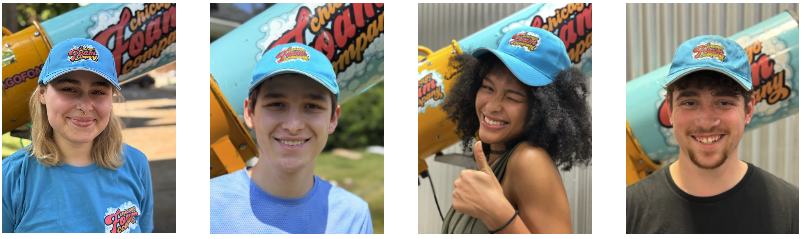
At Chicago Foam Company, we take that transparency seriously. We hire teachers, camp counselors, and college students with experience supervising kids, and many of our operators return season after season. We also show exactly who we are and who we hire, so you know who’s behind the brand and who may be running your event. (Just click “Team” at the top of any page on our website.) That continuity matters—it means your party is run by someone who’s done this before and knows how to keep things fun, organized, and under control without over-managing the moment.
7. Full-Service vs. Rental
There’s a big difference between renting equipment and hiring a team.
Some foam parties are essentially DIY rentals, whereas others are full-service mobile party experiences.
-
Some foam party companies don’t really run the party at all. They drop off—or ship—equipment, provide a limited amount of foam solution, and leave you with instructions or a video to figure things out yourself. Setup, operation, pacing, and troubleshooting all become the client’s responsibility.
It’s a lot to handle—managing equipment, water flow, foam output, and a crowd of excited kids at the same time.
A full-service foam party is the opposite. It includes early arrival, proper setup, and active management of foam height and output. The operator isn’t there to “make foam”—they’re there to handle all the intricacies of proper foam production so you don’t have to.
That difference can determine whether the party feels simple and fun or endlessly stressful.
Chicago Foam Company even blasts dance music to really crank up the energy. Our all-ages playlists feature hits from today to get the kids worked up, and hits from decades past to get the adults on their feet.
8. Weather & Flexibility
Sometimes Mother Nature doesn’t cooperate.
When poor weather threatens to ruin your party, rescheduling your event should be easy and free.
-
Most foam parties happen exactly as scheduled. But what if you need a date or time change because of unideal weather or another unexpected problem?
How a company handles those requests matters. Some providers rely on rigid policies that make rescheduling difficult or costly, even when the event itself isn’t the issue.
More experienced companies build flexibility into how they operate. They understand that outdoor events and family schedules sometimes need to shift, and they make the process straightforward—especially for birthdays and other small events, where rescheduling is often the simplest solution.
Chicago Foam Company offers no-cost weather reschedules for birthdays and other small events. Not because weather issues are common, but because when you want to adjust plans, the solution should be easy.
9. Communication & Planning
Clear communication is a strong reliability signal.
How a company communicates with you before your event often reflects how they’ll perform on event day.
-
Foam parties don’t start when the foam turns on—they start weeks earlier. How responsive and organized a company is during planning is often the clearest indicator of how smoothly the event itself will run.
Some providers are hard to reach, slow to respond, or vague about details until the last minute. That uncertainty creates stress before the event even begins.
More experienced companies communicate clearly and proactively. They confirm details, explain what to expect, and share useful information ahead of time so there are no surprises. That preparation doesn’t just make planning easier—it usually means the event itself runs the same way.
10. Pricing
There’s a range, and it reflects real differences.
Foam party prices vary because companies make different behind-the-scenes choices, with some sacrificing quality and others insisting on a great customer experience.
-
The price of a foam party reflects a long list of behind-the-scenes choices. Equipment quality. Foam chemistry. Staffing and training. Backup plans. Insurance. Communication. Whether the company is full-service or effectively hands you a machine and a video.
Each of those choices adds a little bit of cost. Taken together, these elements determine how much responsibility the company is taking on—and how much is being pushed back onto you.
That’s why prices vary. Some companies minimize overhead by using generic foam, a single cannon, minimal staffing, tight schedules, and rigid policies. Others invest in experienced operators, professional equipment chosen for each event, redundancy, proper insurance, proactive planning, and flexibility when plans need to change.
Considering everything above, many people are genuinely surprised to learn how small the gap usually is between those two approaches. For most backyard parties, the difference between a company that does none of this well and one that does all of it right is usually $50–$100.
Final Thought
A lot of foam party companies look the same at first glance. Bu the way they operate can be very different.
If you’d like help planning a foam party that runs smoothly from start to finish, share a few details below and we’ll follow up.